Inclusion Institute
Inclusion Institute
Inclusion Institute 2026
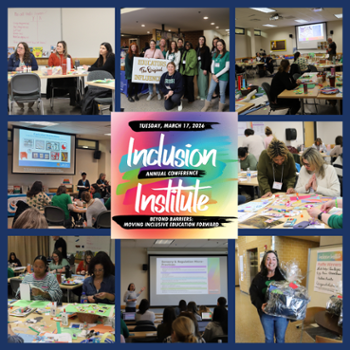
Beyond Barriers: Moving Inclusive Education Forward
The LRC-South's 6th Annual Inclusion Institute is a free, full-day, in-person event focused on navigating and implementing inclusive practices in PK-12 and 18-21 contexts. Through active engagement, educators will focus on content specific to inclusive education.
The Inclusion Institute empowers educators to bridge the gap between inclusive strategies and real-world implementation by creating environments where every individual is seen, supported, and empowered.
Date: Tuesday, March 17, 2026
Time: 8:00AM - 2:45PM
Location: LRC-South at Rowan University, Glassboro Campus, James Hall
We have currently reached capacity for our 2026 Inclusion Institute registration.
Please complete the form below to be placed on a WAIT LIST for the Inclusion Institute.
WAIT LIST
CONFERENCE AGENDA
PRESENTATION BLOCK 1 | 8:45 to 10:15 AM
The 14-Year PD: How Parenting My Disabled Child Has Made Me a Better Special Educator | Erin Putman, MSEd
This entertaining and insightful session offers a unique, dual perspective on the experience of working and living in special education. The presenter, a seasoned Special Education Teacher and the parent of a child with multiple disabilities for 14 years, will share the transformative lessons learned from navigating both sides of the IEP table. The core of the session is built around "Aha Moments"—breakthroughs in empathy, strategy, and understanding—that moved her practice from legal compliance to authentic, effective connection and a passion for improving inclusive culture in her classroom and her school.
Erin Putman, MSEd, a special education teacher for Voorhees Township Public Schools for 25 years, is highly skilled in developing strengths-based individualized education plans and ensuring access to grade-level curriculum for all students. Erin is an alumna of NJ Partners in Policymaking, a Design Team Ambassador for the NJEA Consortium, and served on the Educator Advisory Board at The Nora Project, reflecting her passion for systemic change. Educating children about disability and ableism is her passion.
Best Practices to Support Successful Inclusive Environments in PEA-Funded Preschool Programs | Valerie Beach, Kim Baylock, MSEd, Amanda Bonuomo, Kristin Smyth, MSEd
This information session will guide administrators, educators, and parents in using both the Building Blocks Framework and the Pyramid Model to create inclusive preschool classrooms in PEA-funded programs. These complementary frameworks provide a structured approach to supporting all learners, including children with disabilities, within the general education setting. Participants will begin with the foundation of the pyramid and building blocks: high-quality, developmentally appropriate classroom practices that promote engagement, social-emotional growth, and accessibility for all children. Through collaborative discussion, participants will gain practical strategies for embedding inclusive practices into daily routines using one of the five state-approved early childhood education curricula.
Valerie Beach is an experienced early childhood educator with over 20 years in preschool education, specializing in supporting neurodiverse learners. She now serves as a Preschool Intervention and Referral Specialist with the Camden County Educational Services Commission, partnering with preschool teams across South Jersey and beyond to build inclusive, engaging, and developmentally appropriate learning environments. As a lifelong learner, she continues to seek opportunities to learn, grow, and bring new strategies into her preschool inclusion work.
Kim Baylock, MSEd, is a Preschool Instructional Coach with the Camden County Educational Services Commission, supporting preschool programs across multiple districts in South Jersey. She brings 23 years of experience as a preschool teacher and proudly served as an Army veteran. In her role, she collaborates with educators to ensure developmentally appropriate practices that promote high-quality learning environments. Her work focuses on strengthening instruction while supporting the needs of young students and their families across Camden County and Atlantic County.
Amanda Bonuomo is a Preschool Instructional Coach with the Camden County Educational Services Commission, supporting multiple districts in strengthening early childhood programs. With over 10 years in education, she has experience teaching preschool and special education and collaborating with educators to implement high-quality learning environments and best practices. Amanda is passionate about building strong teams and creating engaging, developmentally appropriate experiences for young learners.
Kristin Smyth, MSEd, is a Preschool Instructional Coach with the Camden County Educational Services Commission, supporting districts across South Jersey. She began her career teaching in self-contained preschool classrooms, a home visit model, and inclusion settings, and later served as a preschool consultant. Kristin emphasizes strong family–school connections, social-emotional learning, and supportive environments that promote independence, growth, and respectful, collaborative relationships among classroom staff.
College Bound & Supported: Empowering Students with Disabilities for Postsecondary Success | Rebecca Finley, MPsy and Chiara Latimer, MFT
This informative session provides a comprehensive and practical overview of the transition to higher education for students with disabilities, with a focus on equipping families and school professionals with the tools needed to support a successful college experience. Participants will explore how disability services offices operate, what documentation colleges typically require, and how accommodations differ between K–12 and postsecondary environments. The session will also highlight the wide range of campus resources that can help students thrive both inside and outside the classroom.
Practical guidance will be offered for parents and educators on how to collaborate effectively during the transition planning process, prepare students to communicate their needs with confidence, and encourage autonomy while maintaining supportive structures.
Rebecca Finley, MPsy, is an Accessibility Specialist at Rowan University and a certified school psychologist with over 15 years of experience in K-12 public schools. She holds a Master’s Degree in School Psychology from Rutgers University. Becca is an active volunteer for disability awareness nonprofits and serves as a special education parent representative in her local school district. She is dedicated to creating inclusive environments that empower all students to succeed.
Chiara Latimer, MFT, is the Director of the Center for Neurodiversity and Autism PATH Program at Rowan University. The Center for Neurodiversity is a cultural center focused on research, programming, and community engagement initiatives to promote neuroinclusion. The Autism PATH program is designed to support the transition of neurodiverse students from higher education into meaningful employment. Chiara has dedicated over 10 years of her career to supporting neurodiverse students in clinical and educational settings.
Inclusion Before Exclusion: Ensuring Supports Before Student Removal | Michele Gardner, MEd
The Power of Regrouping Models: Increasing Instructional Intensity and Enhancing Learner Agency | Taija Haller, MA
This interactive session explores the power of station teaching, parallel teaching, and alternative teaching in your co-taught class! Participants will deepen their understanding of the three regrouping models; discuss how to use these co-instructional approaches to intensify instruction and enhance learner agency; and walk away with practical tools and resources to support them in this endeavor. This session is ideal for middle-grade and secondary co-teachers, as well as the instructional leaders who support them in this journey.
Taija Haller, MA, is a Technical Assistance Specialist with the Learning Resource Center-South dedicated to supporting educators as they implement inclusive practices and cultivating a professional learning community for novice teachers. Previously, she was a middle school special educator in a Title I school for thirteen years. She has a Bachelor of Science in Special Education and a Master of Arts in Intercultural Studies.
Reading, Unlocked: Assistive Tech with Chrome Extensions | Alicia Drelick, EdD
This session equips educators to match Google Chrome Assistive Technology (AT) extensions to specific reading barriers (decoding, visual crowding, attention, or vocabulary) so students can access grade-level content. We’ll explore four support categories (Text-to-Speech, Readability, Comprehension, Navigation) and model key features from select extensions. Participants will have hands-on time to install, pin, and configure a tool on a real article or PDF, then reflect on the barrier and AT feature match for a target learner. Participants will leave the session with a mini training plan for one student that introduces the chosen extension and outlines first-use practice and simple effectiveness checks.
Alicia Drelick, EdD, is an Assistant Professor of Inclusive Education at Rowan University. She is a certified Assistive Technology Professional and former special education teacher. Dr. Drelick's interests are in leveraging technology to support inclusive education, UDL, and teacher preparation.
Teaching and Learning Impact: Adverse Childhood Experiences (ACE) and Traumatic Stress | Pamela Cooper, PhD
Adverse childhood experiences (ACEs) are traumatic, common, cumulative events occurring before age 18 years. The Center for Disease Control, (CDC) uses a qualitative description that 76.1% of students report one or more lifetime prevalence of ACEs, and 18.5% report four or more ACEs, including emotional, physical abuse, sexual abuse, physical neglect, witnessed violence, poor mental health, substance use, learning/behavioral disorders, and incarceration. Students who had experienced ACEs were highest for suicide attempts (89.4%), seriously considering attempting suicide (85.4%), and prescription, vaping, or opioid misuse (84.3%). Teachers, administrators, mental health workers, community, shareholders, and policymakers can jointly develop ways to understand, cope with, support, and/or prevent Adverse Childhood Experiences (ACEs).
Dr. Pamela Cooper, Educational Diagnostician, LDT-C, Winslow Township Public Schools. Experiences include Teaching, Guidance Counselor, LDT-C and School Administrator. Holds several certifications and degrees (B.A, M.A. Education, M.A. Business Administration, PhD. Neuropsychology). Presents at the N.J.E.A. Convention, published in NJEA Review and Hammonton Gazette. Active member of several professional organizations and has a passion for research/publishing, mentoring, gardening, training, and working with all forms of diverse populations.
Windows, Mirrors, and Sliding Doors: Reflecting Disability, Opening Possibilities in K-12 Education | Kim Pinckney, PhD
This workshop introduces Dr. Rudine Sims Bishop's "Windows, Mirrors, and Sliding Doors" framework and its critical application to authentic disability representation in K-12 education. Participants, including K-12 educators, administrators, and support staff, will explore how to create inclusive learning environments that truly reflect and celebrate the contributions of individuals with disabilities, moving beyond mere compliance with the NJ Mandate. The session will provide practical, cross-disciplinary strategies and resources for integrating diverse disability experiences into curriculum, instruction, and classroom culture.
Kim Pinckney, PhD, has more than 20 years of experience in the training and education fields. Dr. Pinckney is a former Spanish educator who has also served as an instructional designer and performance improvement consultant within academia, industry, and several government and intelligence community spaces. Currently, she is an associate director within the New Jersey Education Association Professional Development and Instructional Issues Division. Her research interests include exploring the intersections between adult learning theories, instructional practices for neurodivergent and disabled populations, digital-age technology demands, needs assessment and evaluation best practices, and maximizing knowledge transfer. She earned her bachelor’s degree in Spanish language and literature from Swarthmore College; a master’s in second language acquisition and application from the University of Maryland, College Park; and a doctorate in instructional design and technology from Old Dominion University.
PRESENTATION BLOCK 2 | 10:45 to 12:15 PM
Charting a Course, Building Capacity, Expanding Mindsets: Strategies and Resources for Inclusive Leaders | Taija Haller, MA
Ready to dive into practical ideas and resources that you can use to advance inclusive practices in your school community? This interactive session invites educators to explore strategies and tools that support key aspects of inclusive leadership, such as charting a course toward growth, building capacity, and expanding mindsets to include all learners. Opportunities for reflection and discussion will be embedded throughout the session to facilitate the sharing of actionable ideas and lessons from the field.
Taija Haller, MA, is a Technical Assistance Specialist with the Learning Resource Center-South dedicated to supporting educators as they implement inclusive practices and cultivating a professional learning community for novice teachers. Previously, she was a middle school special educator in a Title I school for thirteen years. She has a Bachelor of Science in Special Education and a Master of Arts in Intercultural Studies.
Designing Supportive Environments, Routines, and Instruction to Prevent "Challenging Behaviors" | Johari Sykes- Ratliff, MA and Nichole DeSesso, MSEd
This session will focus on how intentional classroom setup, predictable routines, and well-designed instruction can prevent “challenging behaviors,” particularly for neurodiverse learners. Participants learn how classroom layout, inclusion of sensory-friendly elements, and clear visual organization reduce overwhelm and increase independence.The session will also cover the use of visual schedules, first-then boards, timers, and routine-based supports that help children understand expectations and transition smoothly. Strategies that will be explored include: breaking learning into manageable steps, offering choices, incorporating movement, and aligning instruction with children’s developmental needs.
Johari Sykes-Ratliff, MA, is an Early Childhood Associate Teaching Professor in the Early Childhood, Elementary, and Critical Foundations of Education Department at Rowan University. She brings over twelve years of experience from the Camden City School District, where she served as a classroom teacher, master teacher, lead educator, school administrator, and district supervisor. At Rowan, she coordinates the Early Childhood program and supports faculty recruitment, PDS initiatives, and professional learning that benefits educators, families, and communities.
Nichole DeSesso, MSEd, is a dedicated early childhood educator with over 25 years of experience. She is the Supervisor of Early Childhood for Camden City School District and an Adjunct Professor at Rowan University. Specializing in curriculum development, teacher training, and performance-based assessment, she is passionate about fostering young learners’ success. Nichole holds a BA in Psychology, a Master’s in Educational Leadership, a Teacher of Psychology Certification, Special Education Certification and a NJ supervisory certification.
From Witnessing to Wellness: Trauma-Informed Creative Arts Practices for Every Learner | Jessica Asch, MA
This hands-on session introduces trauma-informed creative arts practices, drama-informed exercises, projective media, and collaborative storytelling that help school communities process collective trauma while strengthening inclusive culture and belonging. Participants will experience adaptable, low-risk activities, see how to scaffold safety and choice, and learn ways to offer multiple pathways to participate so every learner can engage meaningfully. The approach draws on intergenerational “witnessing” and embodied storytelling to build empathy, dignity, and voice—without requiring public performance or personal disclosure.
Jessica Asch, MA, LCAT, RDT is a licensed creative arts therapist who has worked with many different populations, such as adolescents in the juvenile justice system, survivors of the Parkland, Florida shooting, Holocaust Survivors, and many others living with mental health struggles. Jessica is passionate about working from an anti-oppressive, trauma-informed lens and bringing creativity into all of her work. Her work has been recognized by NPR, The New York Times, and studied by the University of Miami.
Inclusive by Design: Considering AI as AT | Vanessa Lombardo, MEd, ATP
Innovation Exchange: A "Give & Get" Gallery Walk to Break Language Barriers | Kitty Douglas, JD and Angela Wright-Yelverton, MSEd
Kitty Goldsberg Douglas, JD, is a professional learning consultant with twenty years of leadership experience in teaching, training, supervising, facilitating, developing curriculum, and implementing programs. Her professional background includes a New Jersey Standard Elementary Teaching Certificate, a New Jersey Teacher Leader Certificate, a New Jersey Supervisor Certificate, a New Jersey Principal Certificate of Eligibility, and membership in the New Jersey State Bar and the Maryland State Bar Associations.
Angela Wright-Yelverton, MSEd, is a veteran educator with over 20 years of service with the Camden City Schools. A Philadelphia native, she is a graduate of Hampton University and holds a Master’s in Educational Leadership from Walden University. Currently an inclusion teacher at Creative Arts High School, she is an NJEA presenter, school leader, mentor, and community advocate dedicated to empowering and educating youth.
NeuroInclusive Micro-Practices: Small Shifts That Transform Learning | Meredith Gapsis, EdD
This session introduces NeuroInclusive Micro-Practices—small, high-impact strategies that strengthen inclusive classroom culture, reduce barriers, and support diverse neurocognitive needs. Participants will explore simple communication, sensory, and executive function practices that fit naturally into daily routines. Through modeling, collaborative design, and hands-on examples, educators will leave with practical tools they can implement immediately to create more accessible, universally designed learning environments.
Meredith Gapsis, EdD, is a neuroinclusion consultant, educator, and advocate with over two decades of experience working alongside diverse learners across educational and organizational settings. Through NeuroAdvocacy & Consulting, she helps schools and teams translate research into actionable Neuroinclusive Micro-Practices—small, sustainable shifts that foster access, belonging, and impact. Her work centers on neurodivergent voices, practical systems change, and tools people can use immediately.
Small Edits, Big Access: High-Impact Accessibility for K–12 Instructional Materials | Alicia Drelick, EdD
This session helps educators make accessible instructional materials (AIM). Applying UDL as the design frame and the principles of accessible design as the checklist, participants will learn and practice fast, high-impact fixes (headings, alt text, contrast, readable layouts, meaningful links, table structure, captions/transcripts). Teachers leave with one classroom materials remediated and a simple workflow to apply every time they build materials.
Alicia Drelick, EdD, is an Assistant Professor of Inclusive Education at Rowan University. She is a certified Assistive Technology Professional and former special education teacher. Dr. Drelick's interests are in leveraging technology to support inclusive education, UDL, and teacher preparation.
Supporting the Invisible Load: Strategies for Sustainable Inclusion | Rachelle Molyneaux
Students with mild or invisible disabilities, such as mild cerebral palsy, high-functioning autism, or anxiety, often appear to manage the school day easily. Yet the hidden effort required to participate, regulate, and keep up with peers can lead to fatigue, sensory overload, and after-school collapse. This interactive session gives educators a first-hand look at the invisible load students carry. Through hands-on simulations, energy mapping, and collaborative planning, participants will identify high-fatigue points and explore easy-to-implement proactive supports. Educators will leave with practical strategies to sustain student engagement, prevent burnout, and create truly inclusive learning environments. By honoring the hidden effort students expend, schools can foster equity, accessibility, and meaningful participation for all learners.
Rachelle Molyneaux is an inclusion advocate and parent-expert bridging the gap between educational theory and the lived experience of learners with unique needs. Specializing in the "Invisible Load," she identifies the hidden sensory and cognitive effort students expend daily. Through practical tools like Energy Mapping, Rachelle empowers educators to create sustainable, high-capacity classrooms. She is also a children’s author focused on building confidence to help all students thrive.
Using the Constructivist Approach to Physical Science in the Inclusive Early Childhood Environment | Jason Verdone
This hands-on session will look at using and implementing physics in the early childhood classroom. This session will be presented from a constructivist approach, working with force and motion, simple machines, as well as ramps and pulleys. This session will also tie into the Creative Curriculum’s ball study and how balls are an integral part of physical science. All activities and discussions will align with the New Jersey Preschool Teaching and Learning Standards.
Jason Verdone has been in the Early Care and Education field for 25 years, serving in many different capacities. He served as director of childcare services for the YMCA of Camden County and worked within The Childcare Resource Center at EIRC-Resource and Referral offices for Gloucester and Cape May counties. He has been working with the Learning Resource Center-South for the past 20 years, where he currently serves as the Family Events and Center Coordinator.
PRESENTATION BLOCK 3 | 1:15 to 2:45 PM
Building Collaborative Approaches to Support Multilingual Learners with Disabilities | Aphrodite Dellaporta, MSEd and Jenny Murphy, MA
In this interactive workshop, participants will explore the important intersection of language acquisition and special education while learning how collaborative partnerships among classroom teachers, instructional specialists, and child study team members can drive meaningful outcomes for multilingual learners with disabilities. Inspiring success stories will highlight what’s possible when teams work together effectively.
Aphrodite Dellaporta, MSEd, is an ESL and special education educator with over 15 years of experience supporting multilingual learners and students with learning disabilities. A Rowan University alumna, she holds an M.Ed. in Teacher Leadership with a core content focus in Special Education and is an NJ-licensed Learning Disabilities Teacher Consultant (LDT-C). She was recognized by the NJCIE for inclusive practices and serves as the Special Education Representative on the NJTESOL-NJBE Executive Board and the NJDOE Bilingual Advisory Committee.
Jenny Murphy, MA, is an Education Consultant for the Learning Resource Center–South and is committed to supporting educators in their professional growth and instructional practice. She focuses on developing programs and resources across grade levels that strengthen inclusive practices. Jenny is ESL certified, holds a Master of Arts in Higher Education (Instructional Track), and has served as a Rowan adjunct instructor.
Building Your Low Tech Toolbox: Simple Solutions to Support All Learners | Judi Kibelstis, MA
This session explores how readily available materials can be used to create impactful DIY assistive tools to support all students. Providing access to simple modifications and personalization for all students normalizes the use of assistive technology (AT), reduces stigma, and supports diverse learning needs across grade levels. Participants will walk away with a toolbox of ready-to-use, practical ideas to integrate cost-effective AT, drive student independence, and foster a culture of classroom equity.
Judi Kibelstis, MA, is the Instructional Materials Specialist for the Learning Resource Center-South. She began her career in education as a secondary Social Studies and English teacher in Philadelphia and has been focused on inclusive education practices since joining the LRC-South in 2011. She earned her Master’s degree in Educational Technology from Rowan University.
Celebrating Neurodiversity Culture: A Reading Party | Amy Accardo, EdD, Madeline Boehning, PhD, and Casey Woodfield, PhD
This session, structured as a reading party, will invite and guide participants in exploring selected LRC-South resources related to celebrating neurodiversity culture and pride. Participants will move through several stations where they will explore, read, and engage with brief excerpts from children’s literature, middle-grade novels, young adult fiction, and nonfiction. Following a sensory-supportive reading period, attendees will be guided in considering ways to use the resources in their own classroom and/or schools. Taking a Universal Design for Learning (UDL) lens, the reading party format is designed to provide participants with an alternative to more traditional professional development presentation options, and models neurodiversity affirming ways of engaging through multimodal participation.
Amy Accardo, EdD, is a Co-PI of the LRC-South and an Associate Professor in the Wellness and Inclusive Services in Education Department at Rowan University. Her scholarship and practice focus on barriers and pathways to inclusion for autistic young adults, with particular attention to mental health, belonging, neurodiversity, and inclusive pedagogy. She works with students, educators, faculty, and staff to promote inclusive learning communities.
Madeline P. Boehning, PhD, earned a doctorate in special education from Rowan University. She serves as a professorial lecturer and clinical faculty in literacy at American University. She also coaches City Teaching Alliance fellows in Philadelphia. Previously, Madeline worked as an ELA teacher in co-taught and inclusive classrooms. Her research interests include the policies, structures, and practices that support inclusive learning. Additionally, she is interested in the representation of neurodivergence and dis/ability in the curriculum.
Casey Woodfield, PhD, is an Associate Professor in the Department of Wellness and Inclusive Services in Rowan University’s College of Education. She also serves as Faculty Fellow at Rowan's Center for Neurodiversity. Her work builds capacity for inclusive education with an emphasis on centering the perspectives of autistic and neurodivergent students who use Augmentative and Alternative Communication (AAC). Her scholarly activities focus on communication and inclusion as inextricably connected imperatives, and aim to foster educational approaches grounded in the value of disability and neurodiversity.
Checking for Understanding: Designing Equitable, Real-Time Feedback Loops | Tom Weishaupt, MSEd
Craft and Carry Creativity into a Caring Classroom | Angela Wright-Yelverton, MSEd and Kitty Douglas, JD
Angela Wright-Yelverton, MSEd, is a veteran educator with over 20 years of service with the Camden City Schools. A Philadelphia native, she is a graduate of Hampton University and holds a Master’s in Educational Leadership from Walden University. Currently an inclusion teacher at Creative Arts High School, she is an NJEA presenter, school leader, mentor, and community advocate dedicated to empowering and educating youth.
Kitty Goldsberg Douglas, JD, is a professional learning consultant with twenty years of leadership experience in teaching, training, supervising, facilitating, developing curriculum, and implementing programs. Her professional background includes a New Jersey Standard Elementary Teaching Certificate, a New Jersey Teacher Leader Certificate, a New Jersey Supervisor Certificate, a New Jersey Principal Certificate of Eligibility, and membership in the New Jersey State Bar and the Maryland State Bar Associations.
Leveraging High Quality Picture Books to Make Learning Accessible for All | Cathy Brant, PhD
Cathy A.R. Brant, PhD, is an Associate Professor of Equity in Teacher Education at Rowan University. A graduate of Rutgers University (B.A. & M.Ed.), Cathy began her educational career as an elementary teacher in New Jersey. After six years of teaching, she attended The Ohio State University for her doctoral degree. Her research involves two strands: LGBTQ+ topics in education/teacher preparation and elementary social studies education. Cathy is currently researching the portrayals of social studies content in ELA curricular materials.
The Lion’s Cafe: A Journey in Vocational and Life Skills | Jennifer Connell, EdD, Joann Citrone, Christy Enright, MSEd, and Loraine Hennessey
The Lion’s Cafe began as a simple idea and has grown into a dynamic daily living elective for self-contained high school students, including those in MD, 18–21, Autism, ERI, and POR classes. Inspired by school site visits, the idea evolved from a food truck into a coffee cart. What happened next surprised us all! Now, students prepare lunches for staff, and from these first steps, The Lion’s Cafe was born. The program has grown from a single seed of inspiration into a fully realized concept that blends life skills, vocational experience, and creativity. Beyond preparing food, students develop collaboration, planning, and workplace readiness skills in a real-world context. What began as an idea has blossomed into a vibrant, student-centered program that benefits both learners and the broader school community, demonstrating how thoughtful planning and collaboration can turn a small spark into a meaningful, lasting initiative.
Jennifer Connell, EdD, is the Director of Special Services for the Gloucester City School District. With 22 years of experience as a Principal, Literacy Coach, and teacher, she is a student-centered leader specializing in inclusivity. Jennifer holds degrees and certifications from Liberty, Rowan, Stockton, Wilmington, TCNJ, and Marygrove College. She is dedicated to empowering every student to achieve their full potential and make a positive difference in the world around them.
JoAnn Citrone has dedicated her career to teaching students with diverse abilities—25 years at the middle school level and the last seven in high school within our Daily Living classroom. With a vision to create meaningful opportunities for students to build confidence and independence, she helped develop and launch a student-run café where our young adults learn real-world skills from customer service to teamwork. She is honored to be part of the design team that created our state-of-the-art classroom.
Christy Enright, MSEd, is a dedicated educator in the Gloucester City Public School District with over 25 years of experience. Specializing in high school self-contained settings, she holds a Teacher of the Handicapped certification and is committed to advancing inclusive excellence. Ms. Enright earned her BS from La Salle University, an MEd from Holy Family University, and an MA in Secondary Education with a literacy focus from Grand Canyon University.
Loraine Hennessey is a dedicated special education teacher at Gloucester City High School, where she leads a self-contained classroom for students with multiple disabilities. A proud Rowan University alumna with a Bachelor’s in Special Education, Loraine holds a Teacher of the Handicapped certification. With 23 years of professional experience, she is committed to fostering inclusive environments and delivering specialized instruction that empowers students of all abilities to succeed.
Super Science and Literacy Make and Take | Jason Verdone
This hands-on, interactive session will look at how science and literacy can be tied together to support all learners. This session will center around science-themed storybooks and informational books. Make and Take activities will focus on the four domains of science: Earth, Physical, Inquiry Skills, and Life Science. All activities and discussions will align to the NJ Preschool Teaching and Learning Standards.
Jason Verdone has been in the Early Care and Education field for 25 years, serving in many different capacities. He served as director of childcare services for the YMCA of Camden County and worked within The Childcare Resource Center at EIRC-Resource and Referral offices for Gloucester and Cape May counties. He has been working with the Learning Resource Center-South for the past 20 years, where he currently serves as the Family Events and Center Coordinator.
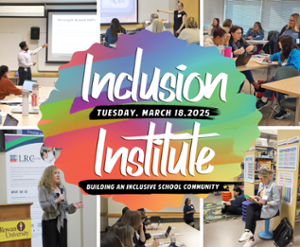
The 5th Annual Inclusion Institute Conference focused on building an inclusive school community.
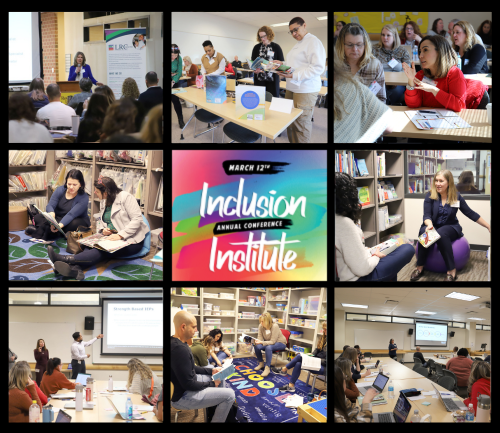
The 4th Annual Inclusion Institute Conference focused on navigating inclusive practices together.
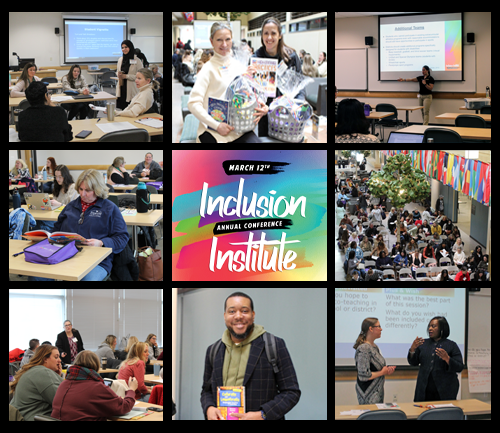
Inclusion Institute 2023
The 3rd Annual Inclusion Institute Conference focused on inclusion in action.
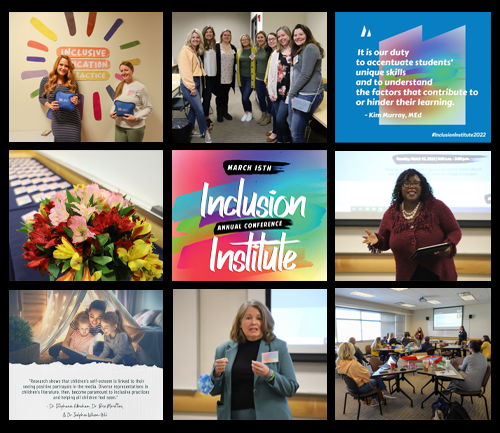
Inclusion Institute 2022
In March 2022, we hosted Inclusion Institute, Content Driven Practices for the Inclusive Classroom: A Dual Modality Conference that offered two options for participation, in-person or virtual.
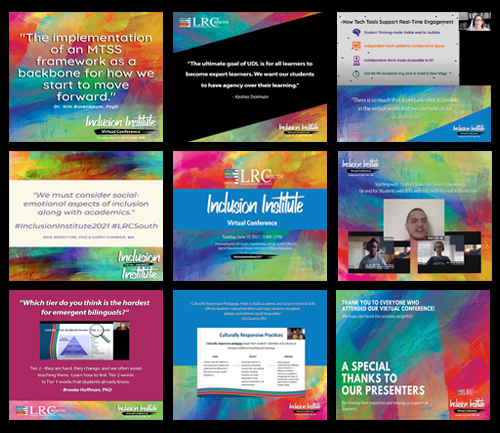
Inclusion Institute 2021
In June 2021, we hosted Inclusion Institute, a FREE full day, virtual event for general and special education educators and administrators that focused on reimagining inclusive education in the post-pandemic classroom.