Co-Teaching
Co-Teaching
Co-Teaching
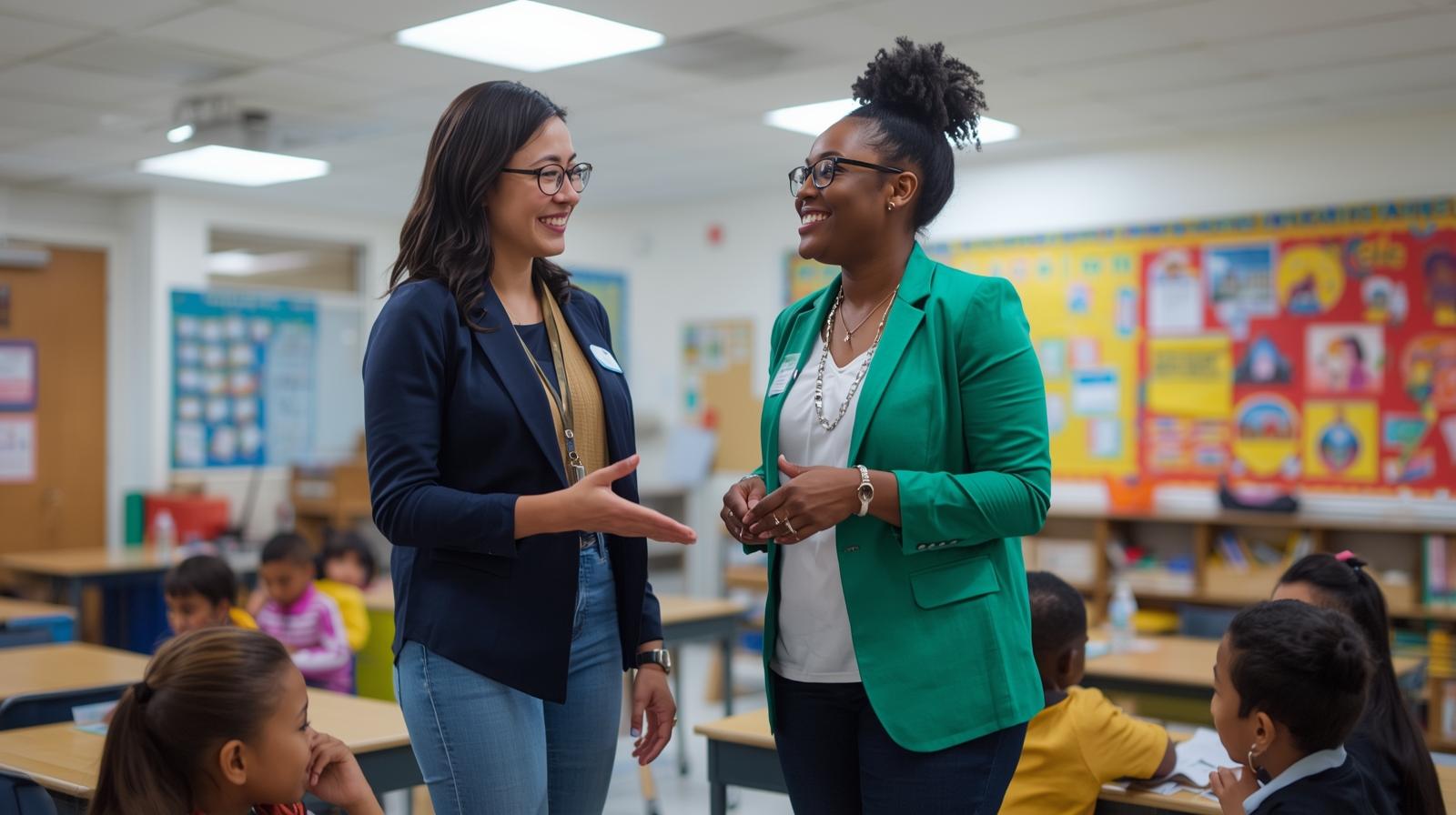
Often used to create inclusive learning environments for students with diverse needs, Co-teaching is a collaborative instructional model where two professional educators share responsibility for planning, delivering instruction, and assessing students in the same classroom, at the same time.
The resources below provide an overview of Co-Teaching models and share strategies and best practices for collaborative partnerships.
Co-Teaching Resources
5 Tips for Co-Teaching | NEA - Whether you are new to co-teaching or have a few years under your belt, it’s a good idea to think about how you can make the most out of your co-teaching partnership.
6 models of co-teaching | Understood.org - There are six basic models of co-teaching. Learn how each model works, what it looks like in the classroom, and when to use it. You’ll also learn about the benefits and challenges of each co-teaching model.
Benefits of Co-Teaching - TeachHUB - Co-teaching, where two educators work together to deliver instruction to a group of students is not just a growing trend in education, but an innovative approach that enhances and strengthens learning experiences for teachers, students, and the school. Take a closer look at the numerous benefits co-teaching has to offer.
Co-Teaching: How to Make it Work | Cult of Pedagogy - In a co-teaching relationship, also known as a “push-in” arrangement, a general education teacher partners with a specialist who may be certified in teaching English Language Learners (ELLs), students with learning disabilities, or some other special population. A co-teaching team works in the general ed classroom; for the majority of the time, students with special needs are not pulled out to receive services in another location.
Co-Teaching Strategies: Dos, Don'ts, and Do Betters - Co-teaching, wherein two professional educators co-plan, co-instruct, and co-assess, can be daunting. It requires far more than putting two adults in a classroom with students, whether that classroom is brick and mortar or virtual. We offer strategies to help novice and veteran co-teaching teams avoid pitfalls, embrace actions that make a difference, and take steps to promote positive outcomes.
Co-teaching Strategies that Work | Edutopia - When clear policies are set around classroom management, pedagogy, and responsibilities, co-teaching can be a transformative experience for both students and teachers.
Creating Inclusive Classrooms with Co-Teaching and the Station Rotation - Dr. Catlin Tucker - Explore five strategies to utilize co-teachers in a station rotation model to enhance the co-teaching experience and ensure that all students, including those with IEPs, receive the support they need.
How to Choose a Co-Teaching Model | Edutopia - Knowing the pros and cons of the six models of co-teaching can help teachers determine which one is best for a given lesson.
What is Co-Teaching? An Introduction to Co-Teaching and Inclusion | CAST - Co-teaching is the practice of pairing teachers together in a classroom to share the responsibilities of planning, instructing, and assessing students. In a co-teaching setting, the teachers are considered equally responsible and accountable for the classroom. Co-teaching is often implemented with general and special education teachers paired together as part of an initiative to create a more inclusive classroom.

Find additional resources to support Co-Teaching with our On-Demand PL-Short videos.
Disclaimer
These links are being provided as a convenience and for informational purposes only; they do not constitute an endorsement or an approval by the Learning Resource Center-South of any of the products, services or opinions of the corporation or organization or individual. The Learning Resource Center-South bears no responsibility for the accuracy, legality or content of the external site or for that of subsequent links. Contact the external site for answers to questions regarding its content.

