Culturally Responsible Teaching

Culturally Responsible Teaching
Culturally Responsible Teaching
Explore materials that reflect diverse perspectives, histories, and cultures to ensure every student feels seen and valued.
Culturally Responsive Resources
Culturally Responsive Information and Resources
Cultural Diversity Toolkit for Early Childhood Educators | Brookes Inclusion Lab - A collection of online resources that will help you teach young dual language learners effectively and support their success.
Cultural and Linguistic Differences: What Teachers Should Know | IRIS Center - Examines the ways in which culture influences the daily interactions that occur across all classrooms and provides practice for enhancing culturally responsive teaching.
Culturally Relevant Education: Course Enhancement Module | CEEDAR - The purpose of this course enhancement module (CEM) is to provide foundational knowledge related to culturally relevant education, including common terms, examples in selected content areas, and information about managing the classroom and individual behaviors. It is designed to be used flexibly for pre- and in-service teacher and leadership professional learning.
Culturally Responsive Education Hub - CRE Hub provides the history, tools, and resources to contextualize and build the movement for culturally responsive education and ethnic studies.
Culturally Responsive Teaching | Edutopia - Find and share resources and explore strategies to engage students by connecting to and honoring their cultures, experiences, and backgrounds.
Culturally Responsive Teaching | International Literacy Association - For literacy teaching and learning to be culturally relevant and responsive, educators must begin by aligning curriculum and instruction with students’ backgrounds, life experiences, and cultures. The following resources offer perspectives on everything from diverse children’s and young adult literature to creating equitable student-centered classrooms.
Culturally Responsive Teaching — National Equity Project - Culturally responsive teaching incorporates and centers unique student experiences and identities, supporting educators to build learning partnerships that result in increased student engagement and ownership of learning.
Culturally Responsive Teaching in Early Childhood Education | Edutopia - Four ways to validate and affirm young students’ cultures in meaningful ways, which can boost their engagement and motivation.
Culturally Responsive Teaching in the Online Classroom - What does culturally responsive teaching in online classrooms look like? How can online instructors use principles of culturally responsive teaching to develop culturally responsive online classrooms?
K12 Hub: Culturally Responsive Teaching | Teaching Channel - Free resources and insights for educators.
NJDOE Diversity, Equity & Inclusion Educational Resources - Provides a wide range of resources that can be used to develop curricula, facilitate professional learning and engage community stakeholders in conversations on incorporating diversity and inclusion throughout the kindergarten through twelfth grade learning environment.
NJDOE School-Related State and Federal Requirements Pertaining to Immigrant Students and Families - The New Jersey Department of Education (NJDOE) is unwavering in its commitment to ensuring that every student, regardless of immigration status, national origin, or religion, can attend public school safely. In addition to the many resources designed to protect the health, safety, and welfare of the K–12 school population provided by the Office of School Preparedness & Emergency Planning (OSPEP), these resources are designed to support school officials, staff, and communities in safeguarding the physical well-being of students and their fundamental right to be enrolled in New Jersey schools.
Resources for the classroom - Let's Fight Racism! | UN.org - There are many ways of making the classroom a place of acceptance and of multiracial celebration.
REL Blog | Valuing Student Experiences: An Introduction to Culturally Responsive Education (CRE) - As the number of students of color in the public school system continues to increase,2 how can educators make educational experiences relevant for students from diverse backgrounds? This is where culturally responsive education (CRE) comes in.
What Is Culturally Responsive Teaching? | EdWeek - Culturally responsive teaching means using students’ customs, characteristics, experiences, and perspectives as tools for better classroom instruction.
What is culturally responsive teaching? | Understood.org - Culturally responsive teaching is a research-based approach to teaching. It connects students’ cultures, languages, and life experiences with what they learn in school.
Diverse and Inclusive Books
1000blackgirlbooks - Marley Dias - Representation matters! After noticing that very few of the books available to her and her peers featured Black female protagonists, elementary student Marley Dias decided to solve a problem. Since its inception in 2015, Marley’s goal to collect 1,000 books with Black girls as the main characters has surpassed itself. The collection now contains over 13,000 books.
Books by Theme | NEA - Book lists from NEA and Colorín Colorado to connect children and their families to diverse books, languages, and cultures and spread the joy of reading.
Coretta Scott King Book Award Winners - Coretta Scott King Book Awards are given to outstanding African American authors and illustrators of books for children and young adults that demonstrate an appreciation of African American culture and universal human values.
Diverse BookFinder - A go-to resource for librarians, educators, parents, book creators, and publishers who seek to create collections in which all children and young adults can see themselves — and each other — reflected in the books they read.
Diverse Books Project | AdLit - Kids need diverse books — places where they can find themselves, see reflections of themselves, and see worlds different from their own.
Find Diverse Books | Research Guides at Towson University
How to Find Diverse Books | Colorín Colorado
Inclusive Booklists | ALA - These booklists highlight diverse voices, including racial diversity and sexuality and can be used in the classroom and when ordering collections. These booklists ensure that underrepresented voices are being heard as well.
Pura Belpré Award | Association for Library Service to Children - Presented annually to a Latino/Latina writer and illustrator whose work best portrays, affirms, and celebrates the Latino cultural experience in an outstanding work of literature for children and youth.
Schneider Family Book Award | ALA - Honors an author or illustrator for a book that embodies an artistic expression of the disability experience for child and adolescent audiences.
We Need Diverse Books - Every reader deserves to find themselves in a story.
Teaching from Multiple Perspectives
Examining Multiple Historical Perspectives Through Primary Sources | Historical Society of PA - Introduces strategies that can be used to prepare students to interact with primary sources when exploring historical perspectives on a certain time period or historical event.
Exploring Diverse Perspectives in Social Studies With ‘Do Nows’ - A short task at the beginning of class can capture students’ attention and expand their understanding of the topics they’re studying.
How to Broaden Middle and High School Students’ Sense of History | Edutopia - By incorporating diverse voices not found in some textbooks, teachers can provide a fuller, more accurate picture of historical events.
How We Go Home: Voices from Indigenous North America Curriculum | @voiceofwitness
How We Go Home: Voices from Indigenous North America shares contemporary first-person stories in the long and ongoing fight to protect Native land, rights, and life. These twelve oral histories shaped by injustice and resilience provide a nuanced, empathy-based understanding of the issues facing Indigenous communities.
Multiple Perspectives NCSS presentation - Teaching what really happened: How to avoid the tyranny of textbooks and get students excited about doing history.
Multiperspectivity: What Is It, and Why Use It? | TeachingHistory.org - Explore the question - What is multiperspectivity in history?
Planning and Teaching with Multiple Perspectives - Providing options in perspective helps children understand that history and the social sciences are made up of many different sources and points of view.
Playing with Perspective | Facing History & Ourselves - Students reflect on the concept of perspective and consider the importance and limitations of our ability to see things from another’s perspective.
Supporting Inclusion with Culturally Responsive Teaching | NJDOE- CRT empowers students by focusing on their assets and by connecting students’ cultures, languages, and life experiences with instruction.
Teaching Perspective - ncheteach.org - Being able to analyze multiple perspectives, including the bias inherent in each perspective, is key to getting closer to a more accurate account of historical events.
Untold History - Stories you won’t learn about in a textbook. New videos are released every week. Developed in partnership with The New York Historical Society, Smithsonian National Museum of American History, iCivics, White House Historical Association, and American Battlefield Trust
Zinn Education Project - Promotes and supports the teaching of people’s history, introducing students to a more accurate, complex, and engaging understanding of history than what is found in traditional textbooks and curricula. Offers free, downloadable lessons and articles organized by theme, time period, and reading level.
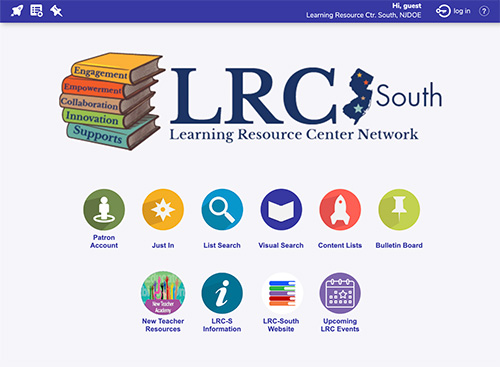
Browse LRC-South library resources with our Alexandria Researcher.
We offer a collection of PreK-21 educational materials, eBooks, professional books, and resources for LRC-South members to borrow. Search by title, subject, author, medium, or content area.
You can also Explore Lists curated by resource collections and content areas.
Disclaimer
These links are being provided as a convenience and for informational purposes only; they do not constitute an endorsement or an approval by the Learning Resource Center-South of any of the products, services or opinions of the corporation or organization or individual. The Learning Resource Center-South bears no responsibility for the accuracy, legality or content of the external site or for that of subsequent links. Contact the external site for answers to questions regarding its content.

