Designing Supportive Environments
Designing Supportive Environments
Designing Supportive Environments, Routines, and Instructions to Prevent Challenging Behaviors in Early Childhood Classrooms with Nichole DeSesso & Johari Sykes-Ratliff
In part one of their two-part series, Nichole DeSesso and Johari Sykes-Ratliff describe the foundations of behavior and how to better define and understand challenging behavior in the early childhood classroom. They explain how to design supportive classroom environments through Universal Design for Learning (UDL) and the importance of predictable routines and transitions.
Please share your thoughts with us! 
In part two of their Designing Supportive Environments series, Nichole DeSesso and Johari Sykes-Ratliff describe how classroom layout, inclusion of sensory-friendly elements, and clear visual organization decrease challenging behavior and increase independence. This session covers the use of visual schedules, first-then boards, timers, and routine-based supports that help children understand expectations and transition smoothly. Additional strategies explored include breaking learning into manageable steps, offering choices, incorporating movement, and aligning instruction with children’s developmental needs.
Please share your thoughts with us!
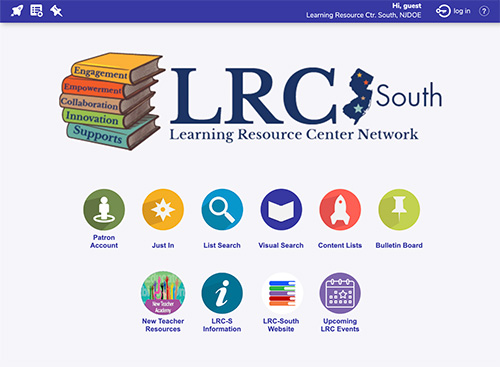
Browse LRC-South library resources with our Alexandria Researcher.
We offer a collection of PreK-21 educational materials, eBooks, professional books, and resources for LRC-South members to borrow. Search by title, subject, author, medium, or content area.
You can also Explore Lists curated by resource collections and content areas.
Explore our on-demand professional learning videos designed to foster inclusive education, family engagement, and student success.
Disclaimer
These links are being provided as a convenience and for informational purposes only; they do not constitute an endorsement or an approval by the Learning Resource Center-South of any of the products, services or opinions of the corporation or organization or individual. The Learning Resource Center-South bears no responsibility for the accuracy, legality or content of the external site or for that of subsequent links. Contact the external site for answers to questions regarding its content.

