Reading Clinic
Reading Clinic
Reading Clinic
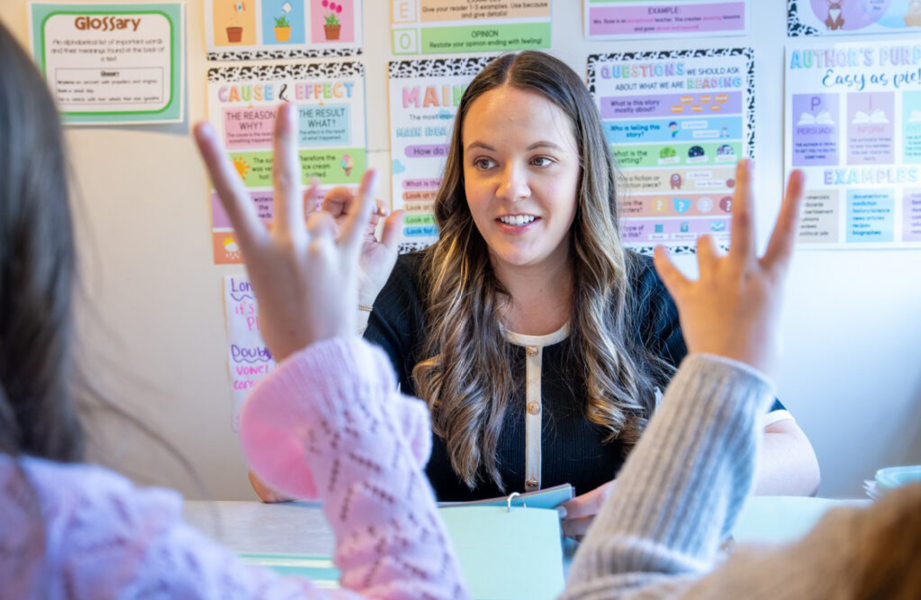
The clinic provides online or in-person one-on-one tutoring that is student-focused and personalized. Our program includes a professional evaluation to determine reading and writing strengths and needs, followed by instruction tailored to each child. We take special care to ensure that the child’s interests and engagement are considered in every tutoring session as well. With curricula focused on decoding, vocabulary, comprehension and writing, a one-hour investment, twice a week, is time well spent that can change a life!
The Rowan Reading Clinic provides research-based literary assessment and instruction to K-12 students within James Hall.
Learn more about how, for 80 years, the Rowan Reading Clinic has been building better readers!
Clinic Hours
- Fall: September-December (Mondays and Wednesdays, 4:00-5:00 or 5:10-6:10)
- Spring: January-April (Mondays and Wednesdays, 4:00-5:00 or 5:10-6:10)
- Summer: End of June-End of July (Mondays-Thursdays, 8:55 am-10:10 or 10:20-11:35)
What assessments do we administer?
Each clinic participant undergoes an initial reading evaluation to determine his/her individual literacy strengths and needs. Our tutors administer a reading inventory, assessing word recognition, decoding skills, fluency, and comprehension. Their writing is evaluated through writing samples. In addition, a developmental spelling inventory is administered. Depending on the child’s needs, further diagnostic assessments are administered in the areas of phonics, phonemic awareness, and oral language. A retest is administered at the end of the clinic to measure the student’s progress. Our tutors also integrate information provided by the family and the child’s current classroom teacher, including any current reading difficulties including but not limited to dyslexia, dysgraphia, and ADHD.
What you should expect from tutoring sessions.
Children receive 20 hours of literacy instruction by 1 or 2 Rowan tutors, supervised by Rowan literacy faculty. Instruction is focused on word recognition (decoding and/or vocabulary), comprehension, fluency, and writing. The content of instruction and methods employed during tutoring are selected from research-based effective practices and align with the State of NJ Literacy Framework. At the conclusion of clinic, the tutor writes a final report that includes testing scores from the initial and final assessment, a detailed description of strategies taught, how the child responded and recommendations for further tutoring. This report is given to the parents/guardians when the clinic is complete.

Registration
Take the next step and register your child for the Reading Clinic.

Staff
Meet the faculty and staff of the Reading Clinic.

Tutors
Meet the Rowan education students who serve as our wonderful tutors.
History
Learn about the 80-year history of the Reading Clinic at Rowan University.